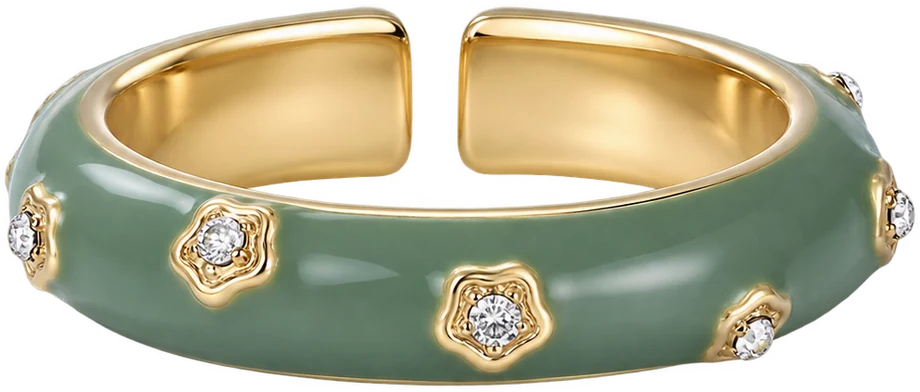
 Available
Chroma Drip Enamel Band Rings
Gold band rings dripped with colourful enamel.
Wealth★★☆☆Calm★☆☆☆Love★★☆☆Career★★★☆
Buy · $25 →“Chinese gods” is a broad search term covering figures from Daoism, Chinese popular religion and overlapping cultural traditions. Buddhist figures such as Guanyin also appear in these searches, but Guanyin is specifically a bodhisattva. Start with the name and the source's own description, then use visual clues to investigate the particular image.
This guide starts with a quick list of commonly searched names, then looks closely at four of them with museum examples. It is not a complete or ranked pantheon, and it gives you a repeatable way to record what is known, what is a clue and what remains uncertain.
These are names you will often meet on temple signs, festival pages and museum labels. The roles are short summaries. Individual temples and sources may describe the same figure differently.
| Name, characters and pinyin | Known for |
|---|---|
| Jade Emperor 玉皇大帝 · Yùhuáng Dàdì | Ruler of Heaven in Chinese popular religion and Daoism, presiding over a court of gods modelled on the imperial government. Columbia’s Asia for Educators overview describes this heavenly court. |
| Guanyin / Kuan Yin 观音 / 觀音 · Guānyīn | A Buddhist bodhisattva of compassion (Avalokiteshvara), often grouped with Chinese gods in searches but not a Daoist deity. See our Guanyin guide. |
| Guandi / Guan Yu 关帝 / 關帝 · Guāndì | The Three Kingdoms general Guan Yu, venerated after death as a god of war and loyalty and adopted as a patron by many trades, according to Britannica. Also called Guan Gong (关公 / 關公). |
| Mazu 妈祖 / 媽祖 · Māzǔ | Goddess of the sea and protector of seafarers and fishing communities along the coast. Also called Tianhou (天后). Mazu belief and customs was inscribed on UNESCO’s Representative List in 2009. |
| Tudi Gong (Earth God) 土地公 · Tǔdìgōng | A local protective god: each village or neighbourhood has its own, according to Asia for Educators. Temples may also use the title Fude Zhengshen (福德正神). |
| City God 城隍 · Chénghuáng | Protector of a city, traditionally seen as the divine counterpart of the local magistrate. Each city has its own City God. |
| Kitchen God (Stove God) 灶君 · Zàojūn | Guardian of one household. Tradition holds that he reports on the family to the Jade Emperor just before the Lunar New Year. |
| Caishen 财神 / 財神 · Cáishén | God of wealth: a role with several forms rather than one person. Zhao Gongming (赵公明 / 趙公明) is one widely known identity. See our Caishen guide. |
| Wenchang 文昌帝君 · Wénchāng Dìjūn | A Daoist deity of literature, traditionally approached by writers and scholars. Museum examples are below. |
| Shouxing / Shoulao 寿星 / 壽星 · Shòuxīng | God of longevity, often shown with a prominent domed forehead. A deer or crane may appear nearby. Museum examples are below. |
| Yue Lao 月老 · Yuè Lǎo | The matchmaker deity known as the Old Man under the Moon, linked to the red thread of marriage. See our Yue Lao guide. |
| Chang’e 嫦娥 · Cháng’é | The moon goddess who drank the elixir of immortality and rose to the moon. See our Chinese mythology stories. |
| Nüwa 女娲 / 女媧 · Nǚwā | The mythological goddess who repairs the sky. Her story is also in our Chinese mythology guide. |
| Zhong Kui 钟馗 / 鍾馗 · Zhōng Kuí | The demon queller. The Met traces his tale to the Tang dynasty, when an emperor was said to have dreamed of Zhong Kui, a ghost who captured and ate a demon. |
Looking for festival dates? Our deity birthdays guide in Chinese reads the lunar-calendar list published by Mengjia Longshan Temple in Taipei, including dates for Guanyin, Mazu, Guandi, Tudi Gong, Wenchang and Yue Lao.
The Met's overview of Daoism and Daoist art describes a diverse religious and artistic history, including deities represented as officials, stars and marshals. It also explains historical overlaps among Daoist, Buddhist and Confucian traditions. A shared artistic setting does not make all their figures interchangeable.
Keep two questions separate: “Who is represented?” and “How does this source describe the figure?” A museum may identify a Daoist deity, a Buddhist bodhisattva or a figure associated with popular belief. A modern illustration may instead emphasize a cultural wish. Preserve the wording attached to the actual object or illustration you are viewing.
| Name or spelling | Context and a useful distinction |
|---|---|
| Wenchang / Wen Chang 文昌 | Princeton identifies Wenchang Dijun as a Daoist deity of literature, traditionally approached by writers and scholars. “God of Literature” is a role description. Retain the personal name when comparing records. |
| Caishen / Cai Shen 财神 / 財神 | The National Museum of Finland explains Caishen as a god of wealth with several forms. Its sculpture is identified as Zhao Gongming. Do not assume every image labelled “God of Wealth” depicts that same person. |
| Shoulao / Shouxing 寿老 / 壽老 · 寿星 / 壽星 | The Met's longevity essay discusses Shoulao, the god of longevity, in the context of Daoist and popular-religion imagery. A wish for long life is a cultural association, not a promised effect of viewing or wearing an image. |
| Guanyin / Guan Yin / Kuan Yin 观音 / 觀音 | Getty identifies Guanyin as a Buddhist bodhisattva of compassion and records several English name forms. Keep that Buddhist identity clear when a general search groups the image with “gods.” |
The Science Museum Group also records the names Shouxing and Shoulao together. Preserve the name used on the individual source rather than replacing all labels with one spelling.
For a closer look at Guanyin's names and image types, use our Guanyin guide. Our Caishen guide in Chinese discusses civil, military and grouped wealth-deity descriptions with Taiwan museum sources.
Princeton's Wenchang Dijun at the Wind Cave, object y1958-257, is a blue-ink rubbing on paper. Its record distinguishes the 1854 stone from the later rubbing, dated to the late nineteenth through first half of the twentieth century. That distinction matters: the date of a design or inscription is not always the date of the physical object in front of you.
Read the source's description of the scholar, mount and attendants, then make your own short list of details visible in the image. This is stronger evidence than deciding that any figure in official-looking clothing must be Wenchang.
The National Museum of Finland's September 2023 article follows the investigation of a wooden sculpture with limited early documentation. The museum identifies its figure as Zhao Gongming using the pose, expression and features. This is an example of an institution explaining its identification, not a rule that one beard, weapon or costume identifies every wealth deity.
When a label says only “Caishen,” record that broad label first. Add a more specific personal name only when the source provides one or the evidence supports a clearly stated proposal.
The Met's longevity essay notes Shoulao's prominent cranium and associations that can include a deer or crane. It places such imagery among motifs used in art for auspicious occasions. Keep the depicted figure, accompanying objects and the occasion in separate notes.
For example, seeing a peach in an image is a reason to investigate longevity imagery. It does not by itself identify every person nearby as Shoulao. Check the title, accompanying figures and institutional explanation.
Use one record per object or illustration. Leave an unknown field blank or write “unconfirmed”. Do not turn a tentative clue into a confident label.
A useful final note might be: “The catalogue identifies this object as Wenchang. I can see the named scene's figures, but I have not independently identified every attendant.” That records both the source and the limit of your own reading.
8 picks, 8 available now. Prices are set by the store.
AvailableGold band rings dripped with colourful enamel.
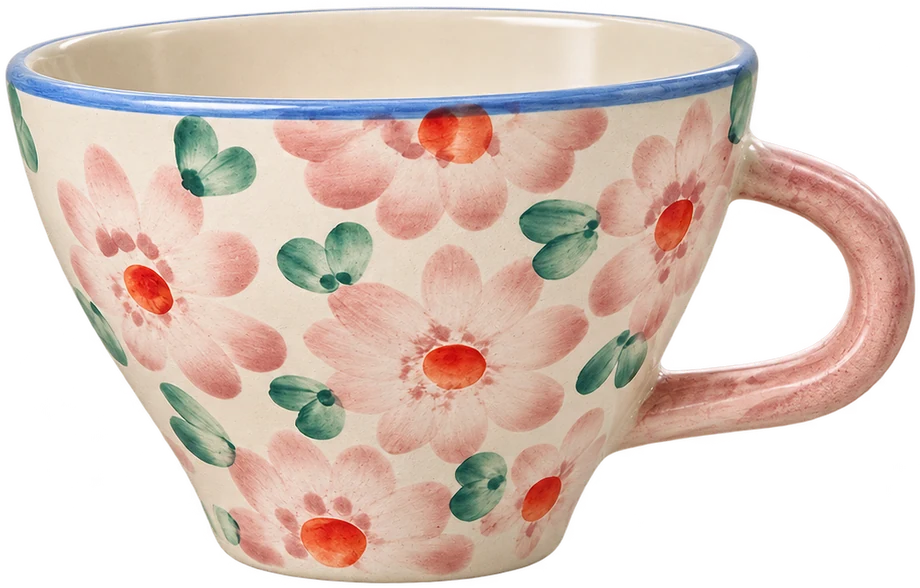 Available
A hand-painted ceramic tea cup scattered with pink flowers.
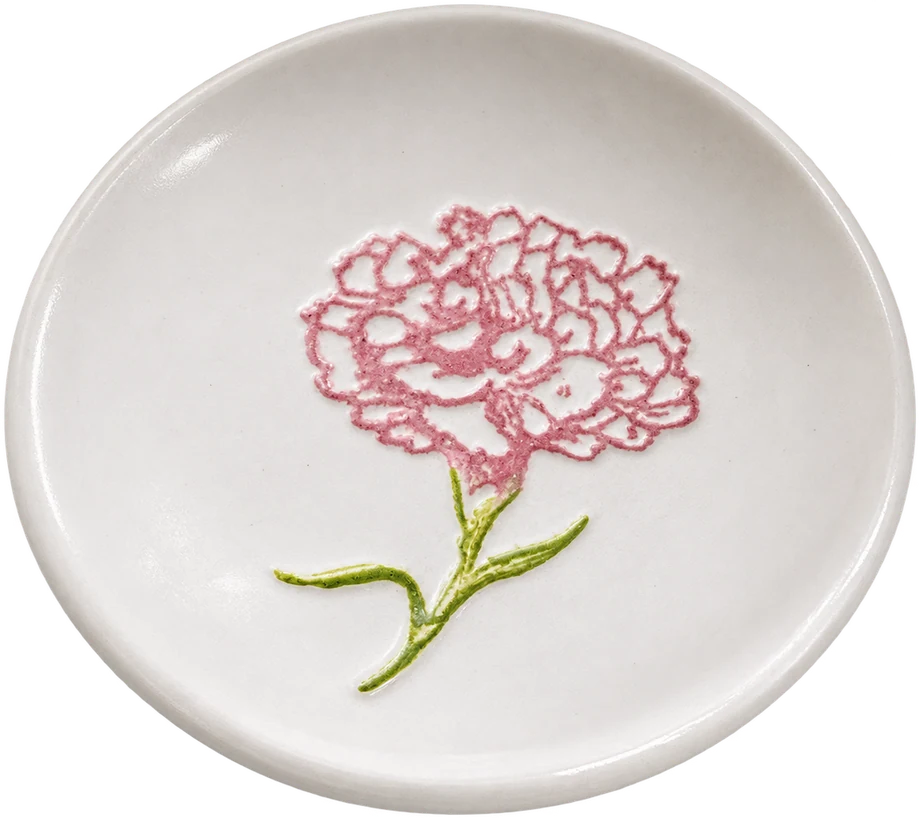 Available
A hand-painted ceramic ring dish with the recipient's birth flower.
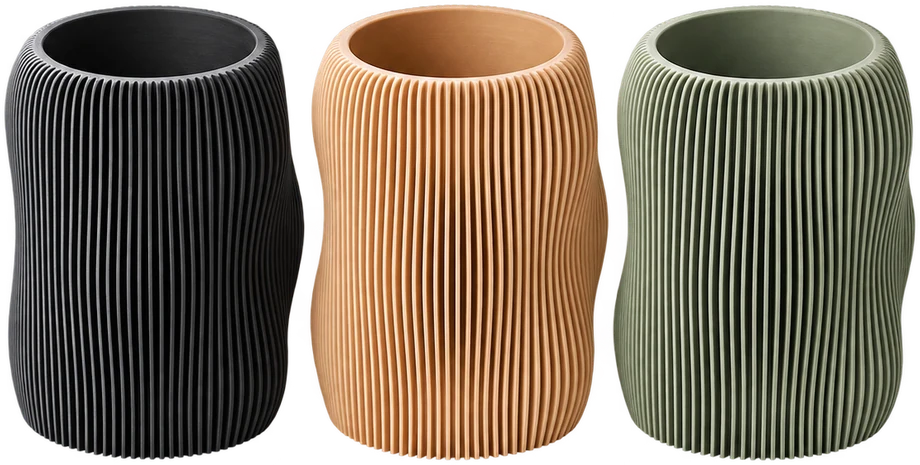 Available
A rippled ceramic pencil holder in earthy tones.
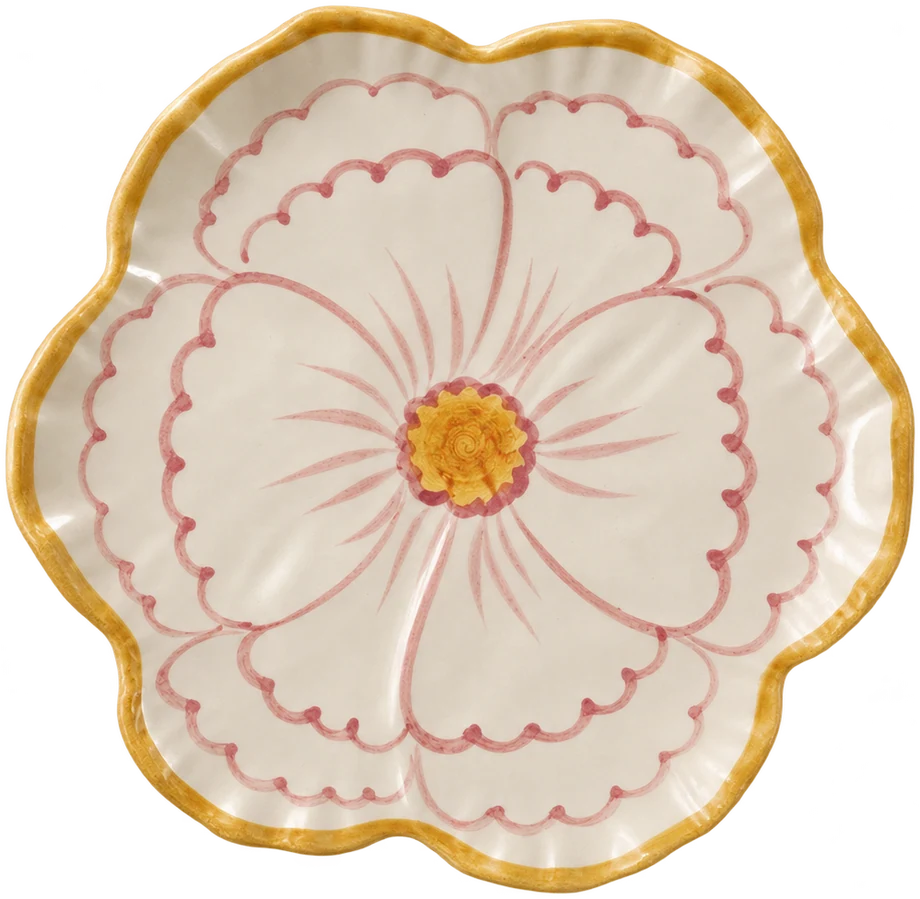 Available
A daisy-shaped ceramic side plate with a gold rim.
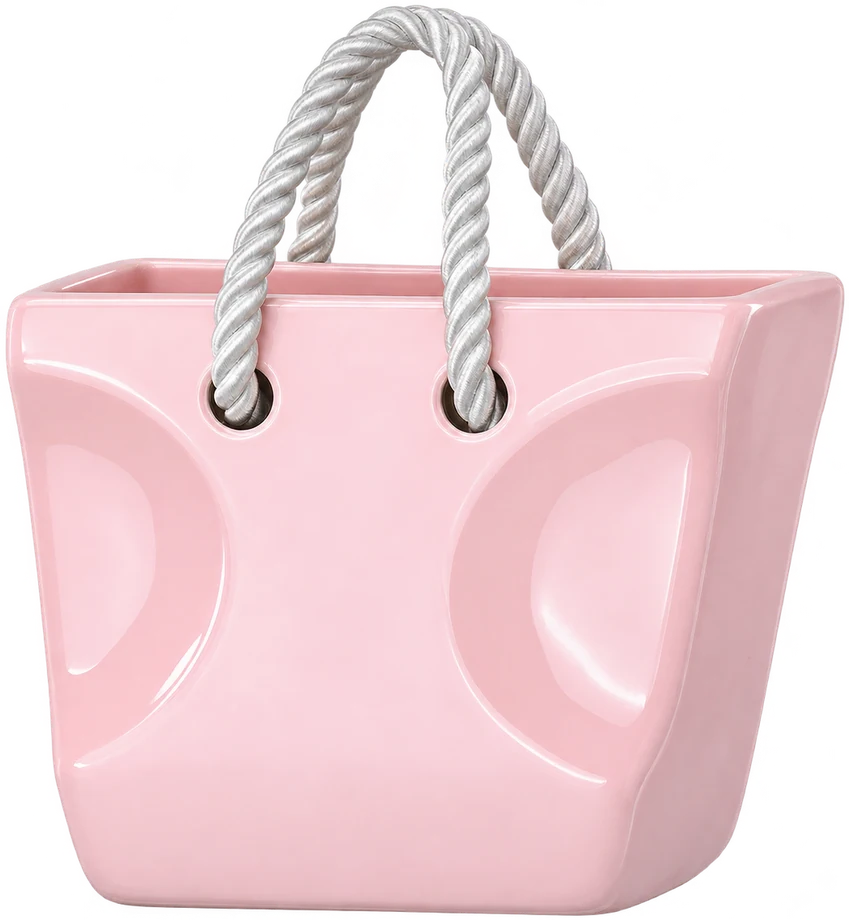 Available
A pink ceramic handbag vase with rope handles.
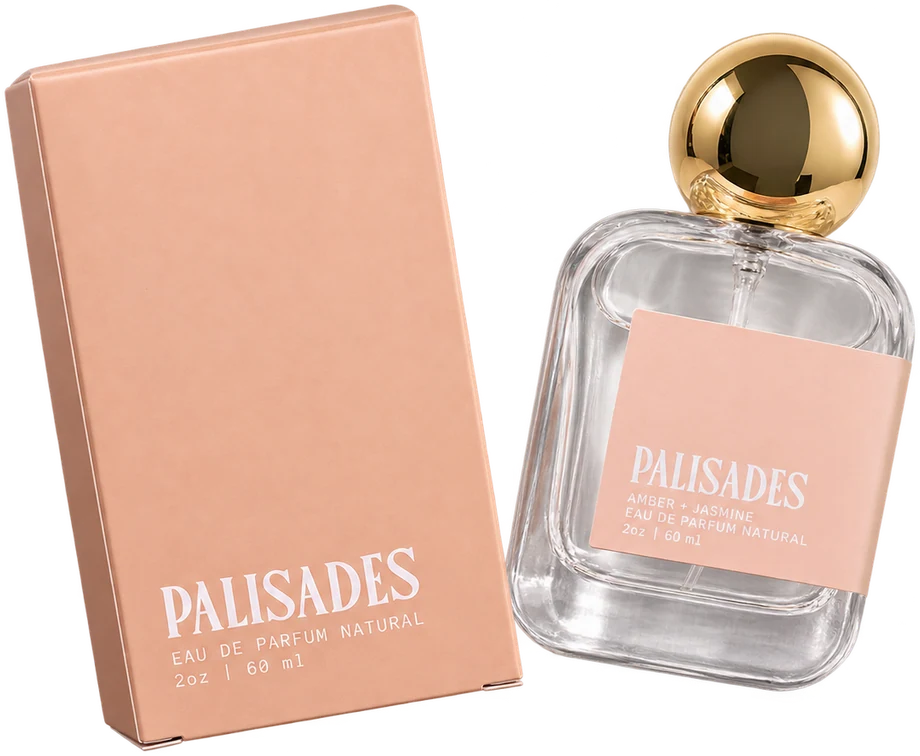 Available
A warm perfume in a peach box, a little reward for a win.
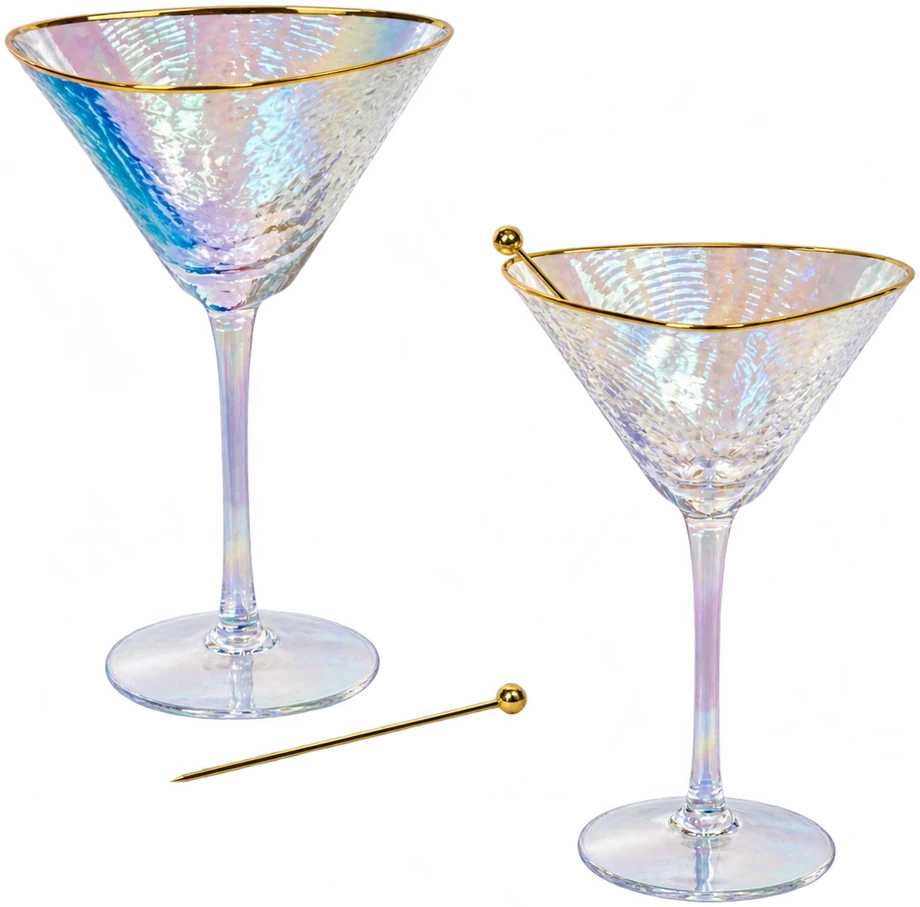 Available
Iridescent hammered martini glasses with gold rims.
Commonly named figures include the Jade Emperor (Yuhuang Dadi), Guandi (Guan Yu), Mazu, Tudi Gong, the City God, the Kitchen God (Zao Jun), Caishen, Wenchang, Shouxing and Yue Lao. There is no single official list: each temple and tradition honours its own set of figures. See the names list above for characters and pinyin.
In Chinese popular religion the Jade Emperor is described as the ruler of Heaven, presiding over a court of other gods. In Daoism the Three Pure Ones (三清, Sānqīng) rank above the Jade Emperor. The Met's overview of Daoism and Daoist art identifies the Three Purities as the highest deities in the Daoist pantheon, so a source’s tradition matters when it ranks deities.
Guanyin is a Buddhist bodhisattva of compassion, associated with Avalokiteshvara. She is widely venerated in China and often appears in searches for Chinese gods. Our Guanyin guide explains her names and image types.
EssaColor Today uses a seven-figure illustration cycle that includes Guanyin, Wenchang, Zhao Gongming and Shouxing. The displayed figure rotates with the date. It is a contemporary cultural presentation, not an identification of an antique, a personal deity selection or a religious instruction.
The page's public daily palette and wallpaper are available without birth information. For the calculation method behind the separate color tools, see our method and limits. For screen-color references, browse the color library. These experiences do not provide temple bookings, offerings or guarantees of wealth, examination results or longevity.
EssaColor editorial team · Sources checked November 5, 2026. Names list added November 13, 2026. Cultural identification and art-reading guide. The worksheet and comparison steps are editorial resources.
Not sure which element is yours? Your birthday tells you.